
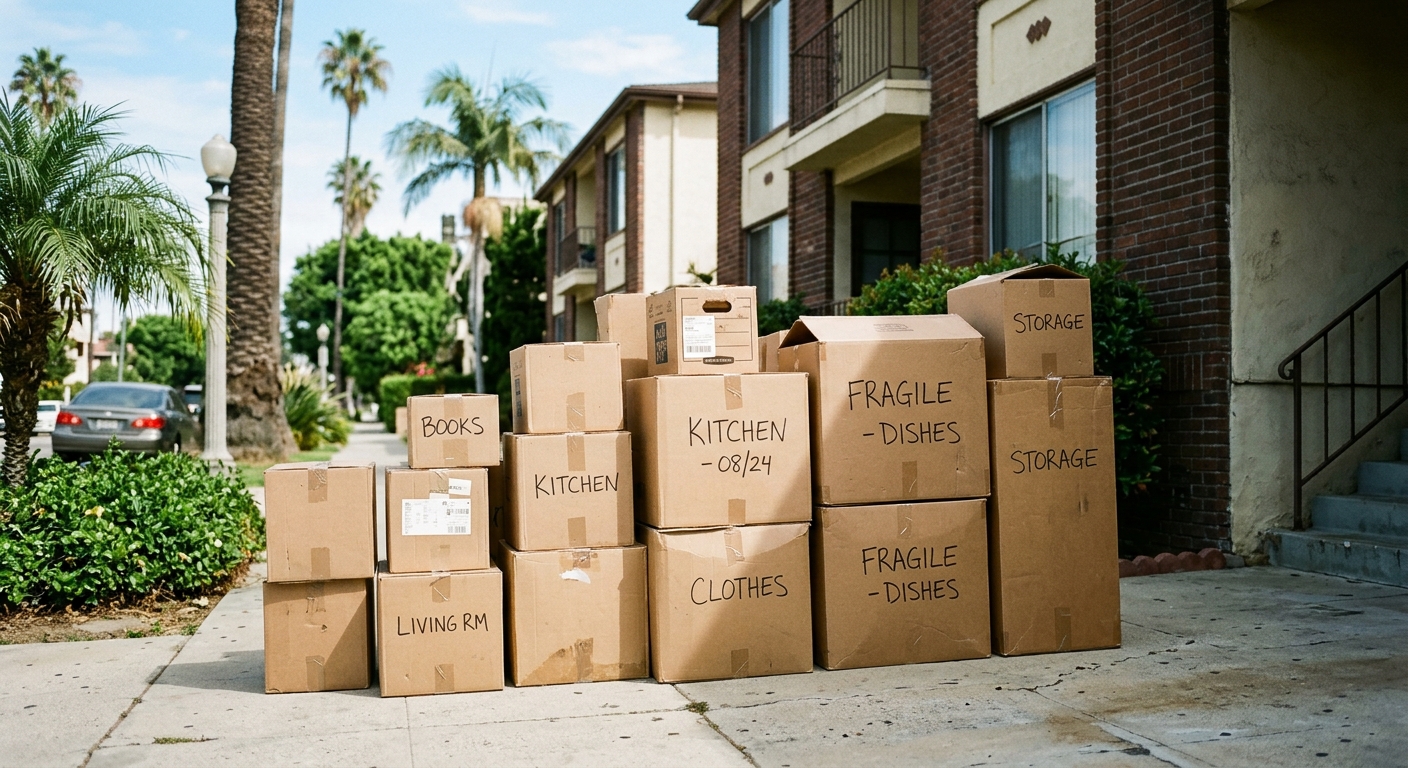
Nobody gets excited about buying a stack of cardboard, hauling it upstairs, and then filling it with the stuff they already own. So, naturally, one of the first questions people ask when planning a move is: Can I get these things for free?
If you’re searching for free moving boxes in Los Angeles, there are several places worth checking before you spend money at a shipping store or moving-supply retailer. Neighbors who just unpacked, local giveaway groups, and online listings can all turn up perfectly usable cardboard, though you’ve got to be careful here: free doesn’t automatically mean suitable. A clean, sturdy secondhand box can handle plenty of everyday belongings. A damp box with a weak bottom? That’s how your kitchen mugs end up having a very bad afternoon.
The smart approach is to find free boxes where you can, inspect them carefully, and buy new ones when the contents or the move itself call for more reliable protection.
Where to Find Free Moving Boxes in Los Angeles
The best source is usually someone who has just finished moving. They’re left with a pile of boxes taking up space and may be happy to pass them along. The trick is finding them before they get recycled or tossed.
The Buy Nothing Project and Local Community Groups
Start with checking Buy Nothing groups and neighborhood sharing communities. Residents often offer moving boxes after unpacking, along with packing paper, bubble wrap, and other supplies. A simple request explaining your moving date, approximate box needs, and pickup area makes it easier for someone to help.
Don’t just ask whether boxes are available. Confirm how many there are, what sizes they come in, and whether they’re clean and dry. If someone has ten small boxes and you need a dozen large ones, you may still need another source.
Facebook Marketplace and Neighborhood Listings
Search Facebook Marketplace and local neighborhood listings for terms such as “free moving boxes,” “moving supplies,” and “used cardboard boxes.” People sometimes list boxes for free after a move, while others offer a bundle of supplies for a small price. Check the listing date and message the seller before driving across town. Los Angeles traffic is already a whole situation, you don’t want to spend 45 minutes getting to a pickup only to discover someone collected the boxes that morning.
Ask for a photo of the actual boxes, not a stock image. If you’re collecting a large bundle, arrange a pickup time and make sure you have enough room in your vehicle.
Friends, Neighbors, and Coworkers
This is the low-tech option, and it works surprisingly well. Ask friends, neighbors, and coworkers whether they’ve moved recently or have deliveries arriving in boxes of useful sizes. You can also ask people to save boxes for a week or two rather than throwing them out immediately. Give them a clear collection date so their garage doesn’t become your unofficial cardboard warehouse.
One advantage here is that you can often get a better idea of a box’s history. If someone used it for clean bedding or kitchen appliances, that’s helpful context. You should still inspect it before packing.
Local Businesses
Grocery stores, bookstores, office-supply shops, and other retailers may receive shipments in cardboard boxes. Some may be willing to let you take suitable boxes, but don’t assume every store gives them away. Businesses have different recycling arrangements, storage constraints, and policies. Call first, ask for the manager or an appropriate staff member, and explain what you’re looking for. If they can’t help, thank them and move on.
For food-related boxes, check carefully for moisture, residue, odors, and signs of pests. A box that held clean, packaged goods is different from one that has been sitting near leaking produce or other messy materials.
How to Check Whether a Used Box Is Safe to Reuse
Not every free box deserves a second life. Before bringing it home, check the cardboard, corners, seams, and bottom. A suitable box should be:
- Dry: No damp patches, water damage, or soft spots.
- Clean: No food residue, grease, mold, or strong odors.
- Structurally sound: No crushed corners, torn panels, or badly weakened folds.
- Pest-free: No droppings, insects, egg cases, or suspicious damage.
- Able to close securely: The flaps should meet without forcing the box into an awkward shape.
A box can look decent from the outside while its base is weakened from repeated use. Open it up, inspect the seams, and check whether the cardboard still feels firm. Avoid boxes that have been stored outdoors or in damp garages, particularly if you see staining or smell mustiness. Cardboard can absorb moisture and odors, and compromised material may fail under weight.
Which Items Can Go in Free Boxes?
Used boxes are often perfectly fine for lightweight, non-fragile belongings, provided they’re clean and sturdy.Good candidates include:
- Clothing and shoes.
- Towels, sheets, and blankets.
- Soft toys and everyday household textiles.
- Lightweight decor and non-fragile accessories.
- Plastic kitchenware and other light items that won’t break easily.
Pack items so they fit comfortably without bulging the sides or forcing the flaps open. Fill empty spaces with suitable cushioning where needed, close the box securely with packing tape, and label it with both the room and a brief description of the contents.
When Is It Better to Buy New Moving Boxes?
Sometimes paying for new boxes is the sensible move. Purpose-made moving boxes give you a more predictable starting point, especially when you’re packing heavy, fragile, or valuable belongings.
Heavy Books and Dense Items
Books are deceptively heavy. Pack them in smaller, sturdy boxes rather than filling a large carton until it’s nearly impossible to lift. New boxes are worth considering if the used ones have uncertain strength or show any signs of wear.
Dishes, Glassware, and Fragile Belongings
Plates, glasses, ceramics, and other breakables need more than a box with four walls. They need suitable wrapping, cushioning, and enough structural strength to handle normal lifting and stacking. New boxes can be a good choice for these items, particularly if you’re unsure how many times a secondhand box has been used. Specialty dish packs or dividers may also help, depending on what you’re packing.
Remember, though, that new cardboard alone doesn’t protect fragile items. Good packing technique and appropriate cushioning matter just as much.
When Box Sizes and Consistency Matter
Standardized box sizes can make loading, stacking, and storage more manageable. If you have a lot of belongings going into one truck, consistent dimensions can make it easier to organize the load. That doesn’t mean you need to buy every box new. You can use free boxes for linens and clothing while buying a matching set of sturdier cartons for dishes, books, and other items that need more predictable protection.
What Other Moving Supplies Should You Budget For?
Finding free cardboard is only part of the equation. You’ll still need supplies to close boxes, protect contents, and identify everything when it arrives. Plan for:
- Packing tape: Use tape designed for cartons, especially for securing box bottoms.
- Markers and labels: Identify the destination room and contents; mark fragile items clearly.
- Wrapping paper: Useful for dishes, glassware, and other breakables.
- Cushioning materials: Choose suitable protection to reduce movement inside the box.
- Specialty protection: Certain mirrors, artwork, electronics, and other delicate belongings may need appropriately sized cartons or purpose-made materials.
You don’t necessarily need to buy every supply brand-new. Clean packing paper and suitable protective materials may be available through community groups or people who have recently moved. Just check their condition and suitability. Avoid using random household materials that could transfer ink, dirt, grease, or moisture to your belongings. And don’t rely on towels alone to secure delicate glassware if the items can still move around inside the box.
Is DIY Packing Still the Best Option?
If you’re comfortable sourcing boxes, checking their condition, packing carefully, and protecting fragile items, doing it yourself can be a practical way to manage a move. But be realistic about the time involved. Finding free boxes means searching listings, arranging pickups, checking the cardboard, and often making several trips. Then you still have to pack everything correctly. For some households, that trade-off is worthwhile. For others—especially people with busy schedules, lots of fragile belongings, or a tight moving deadline—professional help may be the easier option.
A hybrid approach works well, too. Pack clothes, linens, and everyday items yourself using suitable free boxes, then get help with delicate kitchenware, artwork, or other belongings that need more specialized care. GMS offers professional packing services in Los Angeles, including packing materials and assistance preparing belongings for transport. Reach out if you’d prefer help with the whole home or only the more demanding parts of the job.
Save on Boxes, Not on Protection
If you’re looking for free moving boxes in LA, start with community giveaway groups, neighborhood listings, people you know, and local reuse networks. Confirm availability before making a trip, inspect every box carefully, and use secondhand cardboard only when it’s clean, dry, and structurally sound.
Buy new boxes when you need dependable strength, suitable dimensions, or more predictable protection for heavy and fragile belongings. Then budget for tape, labels, and cushioning so your free boxes are genuinely ready for the job. A little planning goes a long way. Get the right boxes for the right belongings, and you’ll save where it makes sense without gambling with the things you’re moving.
And if you’d rather spend less time hunting for cardboard and more time getting ready for your new place, check our packing services to see whether professional help fits your move. Reach out and get a detailed quote today