
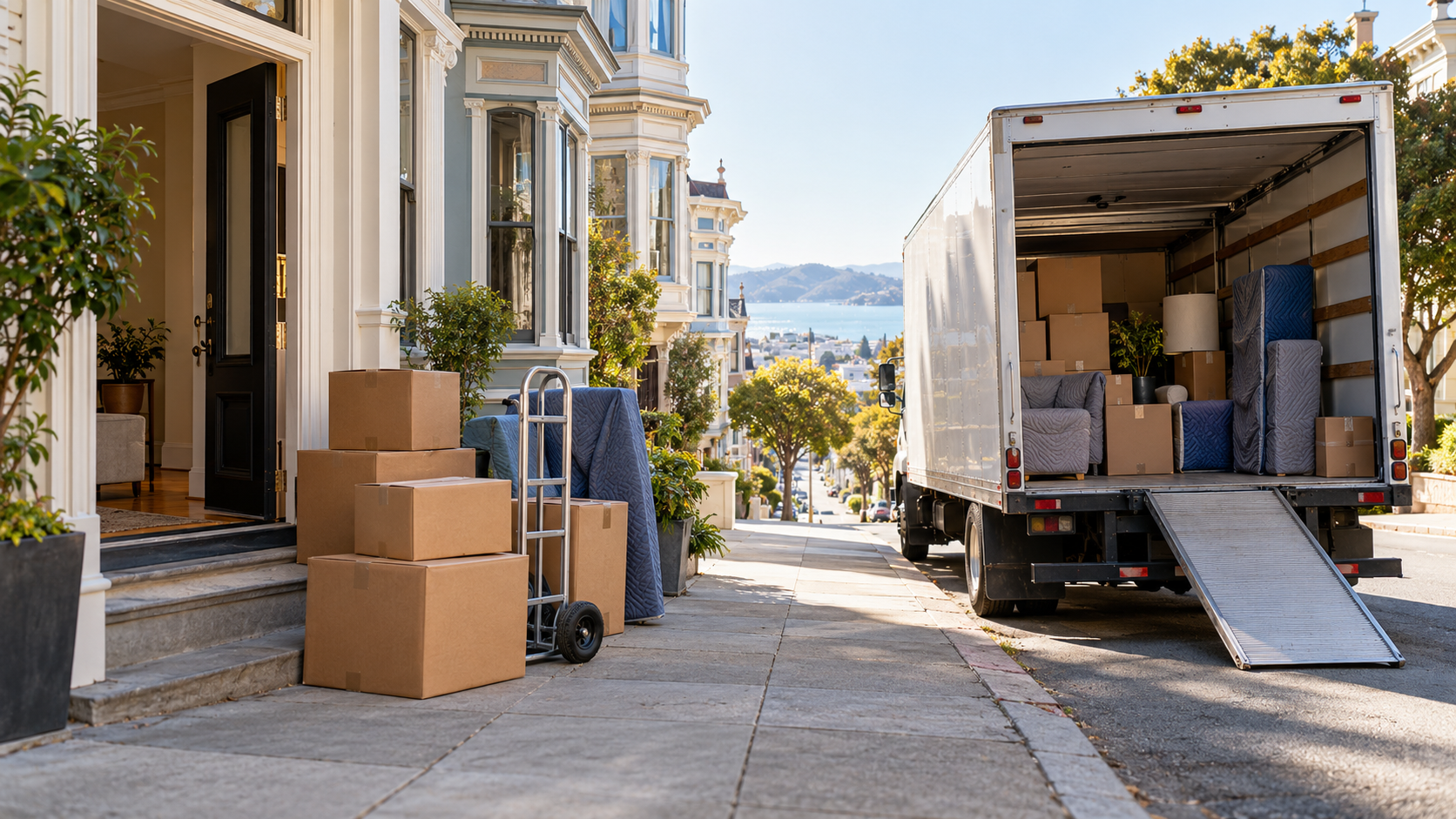
Your furniture is leaving Los Angeles in a moving truck. You’re heading to San Francisco by plane, train, or bus. Two separate journeys, one destination, and a bunch of dates that need to cooperate.
Here’s the thing: moving from Los Angeles to San Francisco without owning a car is perfectly doable. You don’t need to rent a vehicle just to follow your couch up the coast. Professional movers can transport the household shipment while you handle your own travel. What you do need is a plan that doesn’t depend on you and the truck pulling up outside your new apartment at precisely the same moment. That’s a pretty lousy bet, to be quite sincere.
Let’s get the schedules straight.
Plan Your Travel and Moving Dates Separately
First, figure out when you actually need to leave LA. Is your lease ending? Are you handing over the keys? Do you have to be in San Francisco for work on a particular morning? Write those dates down. Then establish when your new place will be ready to receive furniture. Now you’ve got the framework for discussing pickup and delivery with your moving company.
When arranging moving from LA to SF without a car, think of your travel itinerary and household shipment as two related plans, not one shared schedule. Ask the movers to confirm the pickup date and expected delivery window. Don’t assume the truck will arrive whenever your flight lands.
One more thing: don’t book every other commitment around an unconfirmed delivery date. A little flexibility in the calendar can save you a whole lotta scrambling later.
Decide What You Need Before Your Belongings Arrive
Picture this: you’ve reached your new SF apartment, picked up the keys, and ordered dinner. Beautiful. Except your towels, laptop charger, and every clean shirt you own are somewhere inside the household shipment. Well, let’s not do that. Prepare a personal travel bag for the possibility that your belongings arrive after you do. Here’s what you should keep out of the moving truck:
- Identification, lease documents, and other important paperwork.
- Meds and personal-care essentials.
- Phone, laptop, chargers, and necessary electronics.
- Work equipment you’ll need immediately.
- Several days of clothing and comfortable shoes.
- Keys, wallet, valuables, and irreplaceable personal items.
- Basic toiletries and anything needed for your first nights.
Traveling by air? Check your airline’s baggage restrictions before deciding what goes in your carry-on or checked luggage. The whole point of moving belongings without a car is that the moving company transports your household goods. It doesn’t mean every single possession needs to travel with the truck.
Anything you cannot afford to be without should stay with you.
Arrange Access at Both Addresses
Now we’re getting to the part people tend to underestimate. You can have every box packed beautifully, but if the moving truck can’t access the loading area, you’ve got yourself a problem.
Start with the Los Angeles property. Check parking arrangements, building access, elevator reservations, loading restrictions, and any designated moving hours. Then do the exact same thing for San Francisco. And don’t assume the new building operates like the old one. A downtown apartment with a reserved service elevator is a different animal from a house with driveway access. Before booking, clarify:
- Where can the truck legally load and unload?
- Does either building require an elevator reservation?
- Are there restricted moving hours?
- Will somebody need to provide keys or building access?
- Can the destination receive the shipment on the planned delivery date?
If you’re traveling separately and might not be present when the crew arrives, arrange for a trusted adult to meet them. Confirm with your moving company whether that person can act as your authorized representative and what information they’ll need. Make sure everybody knows who’s responsible for access and receiving the delivery.
What If You Arrive Before Your Belongings?
You get to San Francisco on Tuesday. Your household delivery is scheduled for a later date. No big mystery here: you need somewhere to stay, something to sleep on, and access to your daily essentials. If your apartment is ready, you might spend the gap there with a basic temporary setup. Otherwise, consider short-term accommodation until you can move in.
The trick is planning for that possibility before leaving LA. Keep enough clothing and personal items with you, and avoid packing equipment you’ll need for immediate work commitments.
There’s another scenario: your belongings are ready to leave Los Angeles, but your new SF home isn’t ready to receive them. Maybe the lease begins later than expected. Maybe you’re still finalizing the address. Whatever the reason, the shipment needs somewhere to go.
Gentlemen’s Moving Company offers storage in transit as part of our moving services. Your belongings can be collected, stored, and subsequently delivered when the receiving property is ready, subject to the arrangements confirmed for your move. Ask about storage availability, costs, and delivery scheduling before booking.
If there’s a realistic chance your dates won’t line up, discuss storage during the original estimate. Trying to figure it out after everything’s loaded? That’s doing things the hard way.
How to Prepare Your Belongings for a Separate Journey
When you’re traveling independently, your inventory becomes especially important. You won’t be following the truck with a spare car full of forgotten belongings. What gets loaded is what you’ve prepared for shipment.
Start by identifying your furniture, appliances, boxes, and anything that needs special handling. Tell the moving company about bulky pieces, fragile belongings, stairs, and access conditions. For the actual packing, we’d recommend three things.
- Label boxes by destination room: “Kitchen – dishes” is useful. “Miscellaneous stuff” tells everybody absolutely nothing.
- Protect fragile items properly: Don’t toss glassware into a half-empty box and expect the universe to handle the rest.
- Separate your personal travel essentials before packing begins: Keep them in a clearly designated area so they don’t accidentally join the shipment.
If you’ve got a larger household or simply don’t have time to pack everything, professional assistance may be worth discussing. GMS offers full and partial packing services, so you can request help with the entire household or particular rooms. This is also where experienced long-distance movers from Los Angeles to San Francisco can make the process easier to coordinate. GMS operates as a carrier with its own crews and trucks rather than passing the transportation job to a moving broker.
You handle your personal journey. The moving crew handles the household shipment according to your confirmed service arrangements.
Questions to Ask Your Moving Company Before Booking
There’s no prize for pretending you understand a moving estimate when you’ve still got questions. Ask them. When comparing Los Angeles to San Francisco moving services, these are the conversations worth having before you commit:
- What delivery window should I plan around? Ask for the expected delivery window for your specific shipment. Explain when you’ll arrive in San Francisco and when the destination property becomes accessible.
- How are pickup and delivery dates confirmed? Find out how the company communicates scheduling details and who your contact will be if your personal travel plans change.
- What happens if my new address isn’t ready? Ask about the available options before assuming the shipment can simply wait outside the property. Clarify how any change would affect the agreed moving arrangements.
- Is storage available if the dates don’t line up? If you’re considering storage in transit for moving, ask how it works, what it costs, and how subsequent delivery is arranged.
- What should I keep with me rather than put on the truck? Discuss any uncertain items with your mover. As a general rule, keep medication, important documents, valuables, travel essentials, and immediately needed electronics with you.
- Can somebody else receive my delivery? If you won’t be present, confirm whether an authorized representative can meet the crew and what requirements apply. Get that settled before the moving date, not while you’re standing in an airport security line.
Make Two Schedules Work Together, Not Against Each Other
Moving from LA to SF without a personal vehicle doesn’t have to turn into some elaborate logistical circus. The key is accepting that you and your household shipment are taking separate journeys. Confirm pickup and delivery arrangements individually. Make sure both properties are accessible. Carry the essentials you’ll need before delivery, and discuss temporary storage if the new address might not be ready.
Gentlemen’s Moving Company provides long-distance moving services for California relocations, including the LA–San Francisco route. Planning your move? Request a quote from with your inventory, addresses, preferred dates, and any packing or storage requirements. You get yourself to San Francisco. We’ll discuss the plan for getting your household there, too. No personal car required.