
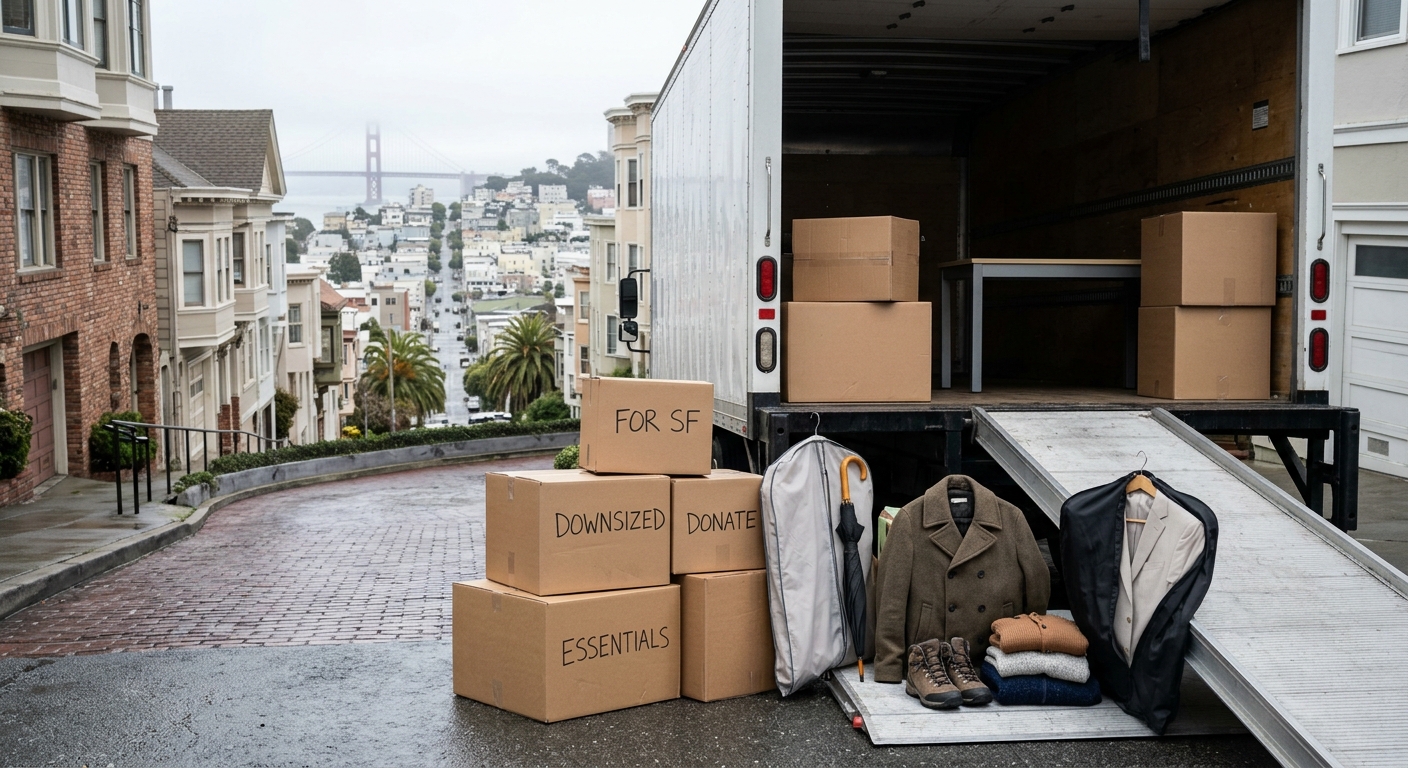
Moving from Los Angeles to San Francisco can mean trading a spacious house, a big garage, and closets that swallow half your wardrobe for a place where every square foot has to earn its keep. Not always, of course. But if your new home is smaller, the move is a good excuse to take a hard look at what you’re hauling north.
Here’s what we can say after years around the moving business: decide what belongs in your new home before you decide how to move it. Paying to transport furniture that won’t fit, boxes nobody opens, and appliances you don’t need is a fine way to spend money accomplishing absolutely nothing.
Downsizing before a move isn’t about tossing everything you own. It’s about building a shipment that makes sense for the home you’re actually moving into.
Start With the Space You Will Have in San Francisco
Before you start selling furniture or filling donation bags, get familiar with your new place. Floor plan first, emotional attachment second. Check the usable floor space in each room, closet dimensions, kitchen storage, and any designated storage areas. Then measure the furniture you’re considering bringing.
Pay special attention to the route into the building. A sofa might fit comfortably in the living room but refuse to cooperate with a narrow stairwell or elevator. Measure doorways, hallway turns, stair landings, and elevator interiors where relevant. Ask building management about access restrictions before moving day. Make a rough layout for the larger pieces: bed, sofa, dining table, desk, and wardrobes. If a piece blocks a doorway or leaves no room to walk, it probably doesn’t belong in that spot.
If you’re planning a move from LA to San Francisco, let the destination dictate the inventory. Don’t make the new apartment adapt to furniture that has no business being there.
Sort Your Belongings Into Groups
Don’t try to make every decision at once. Walk through the home one room at a time and sort belongings into four categories:
- Bring: These are the things you’ll use, want, and have room for. Think everyday furniture, kitchen essentials, clothing, work equipment, and personal items that genuinely belong in your next home.
- Sell or donate: Good-condition furniture, duplicate kitchenware, spare shelving, and items you haven’t used in ages may be more useful to somebody else. Selling can recover some value; donating can get usable items into new hands without turning the process into a second job.
- Store: Some belongings matter to you even though they won’t fit right now. Maybe it’s a family heirloom, seasonal equipment, or furniture you expect to use in a future home. Storage can make sense when there’s a realistic reason to keep the item.
- Remove: Broken furniture, damaged household goods, and items nobody wants shouldn’t automatically join the moving shipment. If they’re no longer useful and aren’t worth repairing, donating, or selling, arrange appropriate disposal or removal.
Here’s the trick: make these decisions before the moving estimate whenever possible. A final inventory based on what you’re actually taking is much more useful than a list of everything you own.
Which Items Are Worth Moving From LA?
Start with function, replacement cost, and fit. Sentiment matters, too, but it shouldn’t be the only factor making the decision:
- Furniture that fits the new layout: A solid bed frame, a comfortable sofa, or a desk that fits your work area may be worth bringing if it’ll serve you for years. If replacing it would be expensive and the dimensions work, keeping it can make sense.
- Everyday kitchenware: Pots, pans, dishes, and useful small appliances are easy to overlook during a big clear-out. You don’t need to rebuy an entire kitchen just because you’re changing cities. Keep the items you use, and let duplicate gadgets go.
- Clothing and personal belongings: Keep what fits your lifestyle and the storage space you have. If you’ve got three coats you haven’t worn in years, well, you know what to do.
- Work equipment: Your laptop setup, monitor, office chair, and essential tools deserve a deliberate decision. Check dimensions and plan where they’ll go before packing them.
- Personal items and collections: Family photographs, artwork, records, and meaningful keepsakes don’t have to justify themselves in dollars. But give them a defined home. If the collection needs six cabinets and the new place has room for one, choose the pieces you most want to display and decide what happens to the rest.
Don’t automatically ditch inexpensive items, either. A modest kitchen tool you use daily may be more valuable to you than an expensive decorative piece that collects dust.
When Does Storage Make More Sense Than Moving Everything?
Storage can be useful when you have a genuine reason to keep something but nowhere to put it in the new home. Maybe you’re keeping a family dining table for a future house. Perhaps seasonal equipment won’t fit in your current apartment, or you’re temporarily moving into furnished accommodation while deciding where you’ll settle long term.
Before arranging long-term storage for furniture, compare three things:
- The expected storage charges over the period you anticipate keeping the item.
- The item’s condition, replacement cost, and personal value.
- The likelihood you’ll actually use it again.
A useful way to think about it: if storing a worn-out bookcase will cost more over time than replacing it later, keeping it in storage may not be a sensible move. On the other hand, a well-made family heirloom may justify the expense even if it sits unused for a while.
Gentlemen’s Moving Company offers long-term storage options. Ask about availability, charges, access arrangements, and any relevant storage terms before deciding what to keep. Don’t pay to store things indefinitely just because making a decision feels uncomfortable. Storage is a tool, not a permanent substitute for deciding what you want.
Finalize Your Moving Inventory Before Requesting a Quote
You’ve measured the furniture, sorted the closets, and made a decision about the dining table. Good. Now get the inventory onto paper. Work room by room and list the larger items, boxes, appliances, and belongings requiring special handling. Include anything unusually heavy or fragile, plus furniture that may need disassembly.
If you’re selling or donating items after creating the list, update it. An accurate inventory helps the moving company understand the scope of the work and prepare an estimate based on what will actually be transported. Also explain the access conditions at both properties. Stairs, elevators, narrow hallways, long carries, and building restrictions can affect how the job is planned.
If you need help packing the belongings you’re keeping, ask about our packing services. GMS offers full and partial packing options, so you can discuss assistance for the whole household or selected rooms. And don’t forget storage. If certain items are going into storage rather than directly to your new home, mention that when requesting your quote so the arrangements can be discussed up front.
Bring What Fits Your Next Chapter
Downsizing before a move doesn’t mean getting rid of as much as possible. It means making deliberate decisions about what deserves space in your next home.
Measure first. Keep the furniture and belongings you’ll use. Sell or donate what’s still useful but no longer needed. Consider storage for items with a genuine future purpose, and arrange removal for things that have reached the end of the road. Then build your moving inventory around those decisions.
Planning a move from Los Angeles to San Francisco? Request a quote based on your final inventory, pickup and delivery addresses, and any packing or storage needs. Get the keep-or-go decisions made before moving day. Your new place will thank you, and so will your budget.