
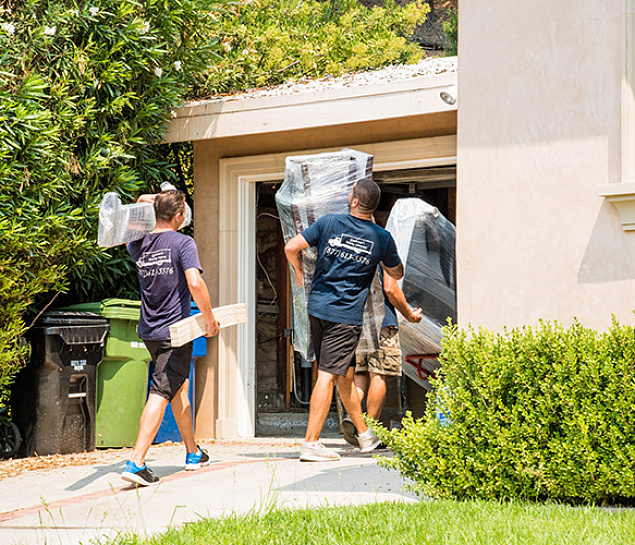
A move gets messy when every breakable object lands in the same “fragile” category. A stack of everyday plates, a framed family photograph, and a television all face different risks.
The useful question is how much protection each item actually needs. Size, weight, replacement cost, shape, and sentimental value all affect that answer.
If you are figuring out how to pack fragile items for moving, start by separating ordinary breakables from pieces that are difficult to replace, awkward to stabilize, or expensive to repair.
At GMS, our Los Angeles moving company, we offer full packing, partial packing, and fragile-only packing. Some customers hand us the whole home. Others want help with the kitchen, artwork, mirrors, electronics, antiques, or a short list of difficult pieces.
When a Specialty Box Is Worth It
A regular moving box works for many household items. Run three checks before choosing something more specialized:
- Can the item stay stable? A sturdy carton with cushioning on all sides is usually enough for smaller, durable belongings.
- Will the box become too heavy? Dishes, books, and other dense items can quickly create a difficult load.
- Would damage be costly or permanent? Antiques, sentimental pieces, artwork, and expensive electronics deserve extra planning.
That is the practical answer to when do I need a specialty box. Use one when it solves a real problem with weight, shape, stability, or protection.
| Situation | Usually Makes Sense |
| Small, sturdy item | Standard box with cushioning |
| Dishes or delicate glassware | Dish pack, dish barrel, or divided protection |
| Hanging clothes | Wardrobe box |
| Valuable or irreplaceable piece | Extra packing planning |
| Large mirror, artwork, TV, or odd-shaped item | Ask us about the safest packing method |
This also helps decide what to pack in specialty boxes. Choose them for belongings that need more structure or separation than a standard carton can provide.
Room-by-Room Breakdown
Kitchen
The kitchen contains plenty of glass and ceramic. Risk varies by item. Wine glasses, stemware, china, sentimental dishes, and glass appliance parts deserve closer attention.
Los Angeles movers from our service wrap glassware individually and pack dishes vertically. Dish packs, dividers, dish barrels, packing paper, and bubble wrap can help keep those pieces stable.
For how to pack glassware for moving, separate the delicate pieces first and avoid making one box excessively heavy.
Pay closer attention to:
- wine glasses and stemware;
- china and decorative dishes;
- glass lids and appliance parts;
- knives that need secure wrapping and clear labeling.
Pots, pans, plastic containers, and many small appliances usually travel well in standard boxes with cushioning.
Living Room
Living rooms often contain large objects with exposed surfaces. Artwork, mirrors, lamps, televisions, glass furniture, and antiques may need individual planning because corners, edges, and screens are vulnerable.
For how to pack artwork for moving, size, frame construction, glass, weight, and value are the useful details to share with us before moving day.
Large mirrors need the same advance information. If you are unsure how to pack mirrors for moving, tell us the dimensions and how the piece is mounted or framed.
Cushions, throws, books, sturdy decor, and many smaller household items usually fit regular cartons.
Bedroom
Most bedroom items are simple to pack. Folded clothes, bedding, shoes, and linens generally need a solid box. Hanging garments can go into wardrobe boxes.
Mirrors and delicate furniture need a closer look. Large dressers, bed frames, or bulky pieces may require disassembly before transport.
Keep jewelry and other small personal valuables with you.
Home Office
Books, paper, folders, stationery, and basic desk accessories can generally go into ordinary boxes. Computers, monitors, and delicate peripherals need more careful packing because screens and internal components can be damaged by impact.
Keep passports, legal records, financial paperwork, and irreplaceable files under your own control during the move.
Tell us about expensive or unusually large computer setups before packing begins.
Kids’ Rooms
Soft toys, books, plastic sets, clothes, and sturdy play items usually need little more than a strong carton.
Electronics, collectible figures, framed decor, glass objects, and sentimental pieces deserve another look. Ask:
- Is it easy to break?
- Is it difficult or expensive to replace?
- Can it sit securely inside a normal box?
These questions make sorting fragile items when moving much easier because each decision is tied to the actual object.
Specialty Packing Options
Specialty packing for moving can mean a dish pack, extra padding, divided protection, a wardrobe box, careful wrapping, or a plan built around one unusual piece.
Our movers Los Angeles use materials that can include:
- moving boxes;
- wardrobe boxes;
- packing paper;
- bubble wrap;
- shrink wrap;
- moving blankets and pads;
- tape;
- straps;
- dollies.
Dish packs, dividers, and dish barrels may also be appropriate for dishes and glassware.
Customers can choose full packing for the whole home, partial packing for selected rooms or categories, or fragile-only packing for mirrors, dishes, glassware, artwork, electronics, antiques, and similar pieces.
We do not present TV cartons, mirror cartons, or custom wooden crating as standard inclusions with every move. Tell us before booking if a particular item requires a specific container so we can discuss the appropriate approach.
Materials are included with our professional packing-service quote. Standard hourly moving rates do not automatically include moving boxes, and extra packaging needs can affect cost.
What to Do If You’re Not Sure
Use one rule: tell us in advance about anything irreplaceable, expensive to repair, unusually large, oddly shaped, or difficult to stabilize.
That is the simplest answer to how to protect fragile items during a move. Early identification gives us time to plan materials, handling, and loading around the pieces that need extra care.
Everyday belongings usually need a strong box, sensible weight distribution, and enough cushioning to stop movement inside the carton.
FAQs
Sometimes. Large, valuable, glass-fronted, or unusually shaped pieces may need extra protection. Tell us the size and construction before moving day.
Wrap each piece individually, add enough cushioning to prevent movement, and use divided protection when appropriate for delicate stemware.
Check its value, fragility, weight, shape, and stability. If it cannot sit securely in a normal carton, ask us about another option.
Packing-service quotes include materials. Standard hourly moving rates do not automatically include boxes, so confirm specialty packaging needs and possible added cost before booking.