
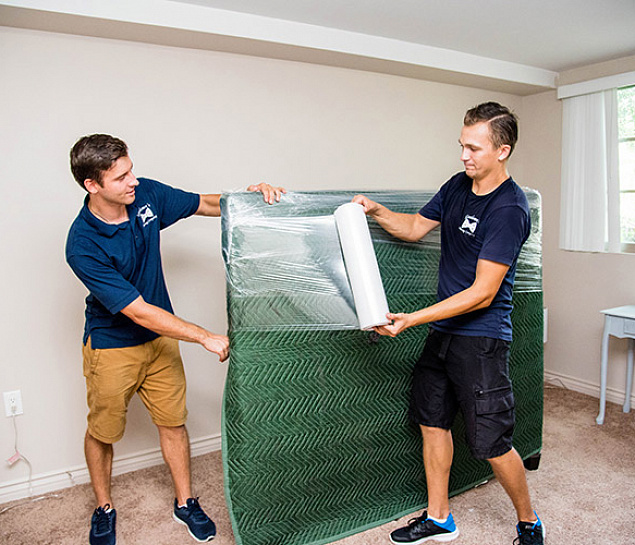
“Should I pack myself or hire someone?” is one of the first questions people search once a move date is actually on the calendar — and it rarely has a clean yes-or-no answer. Almost nobody packs 100% themselves, and almost nobody hands over 100% of it either. Most moves land somewhere in between — a mix of “I’ve got this” and “actually, not this part.” The useful question isn’t whether to pack yourself. It’s knowing which parts of a move genuinely benefit from doing it yourself, which parts don’t, and what you’re actually paying for when you bring in help.
In Los Angeles specifically, the calculation isn’t just about room count. Apartment moves with tight staircases, buildings with narrow elevator reservation windows, and long-distance moves that need to survive hours on a truck all add pressure that a simple “how many boxes do I need” checklist doesn’t capture.
Where DIY packing actually works well. Clothes, linens, books, everyday kitchen items — this is packing at its most forgiving. Nothing breaks if a shirt gets folded wrong. There’s no real skill gap between doing it yourself and paying someone else to do it, so this is exactly the kind of packing that makes sense to knock out on your own time, over a few evenings, without any pressure.
Where the skill gap actually shows up. Fragile and oddly-shaped items are a different category entirely — not because they’re impossible to pack alone, but because the mistakes are expensive and often invisible until the item arrives broken. Glassware needs different cushioning at the rim than at the base. Framed art and mirrors need corner protection that isn’t intuitive unless you’ve done it before. Electronics do better in their original boxes with the original foam — long gone, in most households — which means building an equivalent from scratch. None of this is hard to explain. It’s hard to get exactly right the first time, under time pressure, at 9pm the night before a move.
The cost question: what you’re actually paying for. Packing help isn’t a flat fee for tape and cardboard. It’s a few different things bundled together, and it’s worth naming them separately before deciding what’s worth it:
- Packing materials — proper dish packs, wardrobe boxes, bubble wrap, and packing paper add up fast if bought retail, and most people underestimate the quantity needed.
- Several hours of your time — a full kitchen alone can take a weekend for someone doing it carefully for the first time. That’s real time, whether or not it feels like a cost.
- The risk of replacing damaged items — a cracked heirloom plate or a scratched TV screen isn’t just an inconvenience, it’s a real dollar amount, and often not one insurance fully covers if the packing was self-done.
- Stress before moving day — harder to put a number on, but it’s real. The last 48 hours before a move are already tight; packing being the thing that’s “still not done” is a specific, familiar kind of dread.
Weighed against those four, professional packing for the rooms that actually carry risk often costs less than it looks like on paper — and for the rooms that don’t, it’s usually not worth paying for at all.
Where it makes sense to split the difference. Partial packing is common for exactly this reason. Pack the easy, low-risk rooms yourself. Bring in help specifically for the kitchen, the closet full of framed photos, or the garage where nobody’s sure what’s actually breakable anymore. It’s not all-or-nothing, and treating it that way is usually what makes packing feel harder than it needs to be.
If you’re weighing where to draw your own line, our packing service page breaks down full and partial packing options — useful even if you end up handling most of it yourself and just want backup on the parts that make you nervous. It pairs naturally with our broader Los Angeles moving services, and if your move is headed out of state, our long-distance movers page covers what changes when packing has to survive a much longer trip.
FAQ
Both, depending on what's being packed. For low-risk items, it's mostly convenience and time. For fragile, high-value, or awkwardly shaped items, professional packing materials and technique meaningfully reduce the odds of something breaking in transit — and the cost of one broken item can easily exceed what packing help would have cost.
Yes — partial packing is one of the most common requests. Kitchens, home offices, and rooms with a lot of fragile or valuable items are the usual candidates.
A week or more ahead is a safe minimum, and earlier during busier stretches of the year, since packing crews are scheduled the same way moving crews are.
A short list that consistently causes the most damage or loss when packed without experience: artwork, antiques, fragile glass, oversized or awkwardly shaped items, and high-value electronics. These are exactly the categories where professional packing tends to pay for itself.