
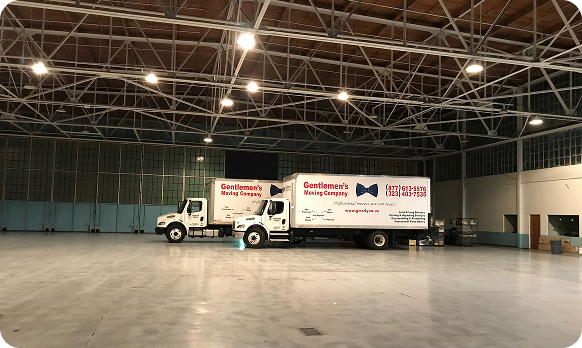
Most people walk into a move certain that one truck is the cheaper choice. Fewer trucks, smaller invoice, less fuss. The assumption is reasonable, and it holds up until three factors enter the math: how long loading takes, how long the driving takes, and the odds that a second trip becomes necessary. Account for those, and a single truck sometimes turns into the costlier route. Is it cheaper to use one truck or two for a move? Depends entirely on the volume of belongings and the distance between the two addresses.
Can Two Trucks Actually Be Faster?
Two trucks at the curb let two crews work the house at once, with no queue at the truck door. One team empties the garage and wrestles the sofa. The other strips the bedrooms and boxes up the kitchen. Total labor hours fall because nobody waits on a single truck to fill before the next armful has somewhere to go.
Where the hours get saved:
- Parallel loading, so two rooms clear at the same moment
- No bottleneck at the truck door, which is exactly where minutes disappear on a one-truck job
- A shorter overall window, which counts for a great deal once the crew bills by the hour
The gap shows up most on stair-heavy buildings, where one loading point leaves Los Angeles movers stuck with furniture in hand, and those minutes never come back.
Why One Truck Can End Up Costing More
The single-truck budget usually falls apart in one specific way. The truck packs full before the house is empty. What happens if the moving truck fills up halfway through the job? A return trip, which unfolds like this:
- Drive the full load to the new address
- Unload everything there
- Drive the empty truck all the way back
- Reload the rest and repeat the sequence
That is a lot of billable time for a truck that spends half of it empty on the freeway. In Los Angeles the return trip gets pricey in a hurry, since city traffic stretches every extra mile of that round trip. Local moves bill by the hour, and the clock keeps running through the return leg because the crew stays on the job the whole time. Double drive time may also apply on moves over 10 miles, a California Public Utilities Commission rule that governs every local job.
One Truck vs Two Trucks Moving: Cost Comparison
Most people want to know how much does a second moving truck cost against the added hours of a return trip. The two paths bill differently.
| Path | How It Bills | Detail |
| Second truck from the start | Two crews on the hourly clock, working in parallel, fewer total hours on the job | Hourly rate set by the number of movers |
| Second trip on one truck | One crew, extra hours for the return drive, the reload, and the second unload | Double drive time may apply on moves over 10 miles |
A 2-person crew and a truck from our Los Angeles moving company runs $129 an hour, with a 3-hour minimum and no hidden fees. Beyond that, move sizes sort into three tiers priced by crew and truck after a quick inventory:
- Small move: 2 movers, 16′ or 18′ truck
- Standard move: 3 movers, 16′, 24′, or 26′ truck
- Large move: 4 movers, 16′, 24′, or 26′ truck
The exact total for any single move comes from a dispatcher quote once the inventory is set. Current numbers are on the GMS rates page.
How Can I Decide How Many Moving Trucks Do I Need?
The cleanest way to decide is to weigh the inventory against a single truck’s usable capacity and treat anything near the ceiling as a two-truck job. A load that lands right at the edge of one truck is the classic trap, because people guess when a measurement would serve them better.
A rough read on your own situation:
- Studio or small one-bedroom with easy access: one truck, almost every time
- Two or three bedrooms, or a house with a full garage: borderline, and worth a real inventory
- A piano, a gun safe, or a packed-to-the-rafters garage: plan for the second truck early
A five-minute inventory review with the GMS team takes the guesswork out. And when a truck or a rented container already occupies the driveway, labor only help supplies the muscle and needs no truck at all.
FAQ
Not always. One truck reads cheaper on the estimate. A mid-move second trip can push the total past what two trucks would run, so have GMS price both options.
The crew brings another truck or comes back for the rest. That return trip adds drive time and a reload, which is why a borderline load warrants two trucks upfront.
Local moves bill by the hour, and the rate tracks the number of movers, so a second crew changes the hourly total. A dispatcher quotes the figure after an inventory.
Weigh the load against one truck's capacity. When it reads close, book the second truck early and skip the gamble. A short call with the GMS team settles the count.